Learn, play, and grow with percussion lessons for kids, teens, and adults at Pleasant Mountain Music.
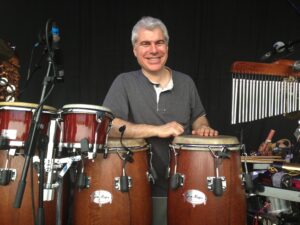
Pleasant Mountain Music is proud to offer percussion lessons in Vancouver for all ages and experience levels. Do you often find yourself tapping your steering wheel when driving? Do people get mad that you are constantly tapping on your desk at work? Do you clap all the time for no reason? Congrats, you might be a percussionist! And our instructors are here to help you develop those habits into focussed musical skills!
About Percussion
- Ideal for: anyone who loves to feel the groove
- Great because: tons of artists want accompanying rhythm or supporting percussion for their act, percussion instruments are often extremely portable, and percussion players can also become their own solo act
- Lesson options: In person at our Granville Street studio is highly encouraged for beginner students especially. Remote lessons may be an option but we recommend chatting with our percussion instructor to be sure online lessons are right for you
- Common styles: Most often found in Jazz, Afro-Cuban music, and Concert Band or Orchestras, however, ANY genre can be spiced up with the addition of a tasty tambo line or cajon
- Space/noise needs: configurations of percussion instrumentation can range from a single drum such as a djembe to a large multi-instrumental kit (including wood blocks, cow bell, splash cybals, and more) or a full set of 4 Kettle Drums (Tympani). Fundamentally, percussion instruments will make more noise than other instruments, especially instruments like the djembe or conga drums (which are meant to carry over a long distance). But there are often quieter options for home practice vs. in-performance so our instructors will make recommendations to help ensure you can keep up your progress without making your neighbours hate you
Get it on, Bang a Gong
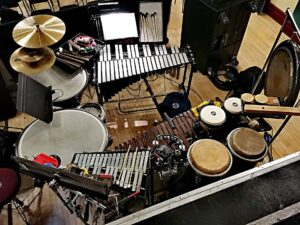
Percussion, rivaled only by singing, is perhaps the oldest instrument invented by humanity. Early humans probably started banging things together in pre-history, and eventually some learned how to keep a beat going, so things just grew from there.
Today, there are thousands of options for percussionists to explore. There are tuned percussion instruments (like tympani, glockenspiel, and handpan) as well as untuned percussion instruments (like castanets, cajon, and tambourine). Due to the vast array of instruments that fall under the umbrella of ‘percussion instrument’, you have definitely heard it many times before even if you didn’t know it at the time.
As long as the object can be held or struck with a stick, it will do the trick. We recommend starting on a hand drum such as a cajon or pair of bongo drums which will enable basic patterns that in turn will unlock a world of possibilities as you develop your rhythmic foundations. Bucket drumming (a catch-all term for using household or unconventional objects to drum on) is a style of drumming that’s gained traction in recent years due to it’s versatility and very low start up cost. Groups that overlap with a bucket drumming style include the Blue Man Group and Stomp.
Finally, when it comes down to it, you don’t really need an instrument to learn percussion at all. Your body can just as easily be the instrument, just look at this guy doing the hambone!
Getting Started & Instrument Costs
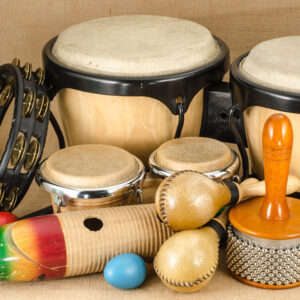
Percussion is very easy to get into. Because of the piece-meal nature of percussion instrument set up, you can start small and add new instruments as you grow. A hand drum like a small djembe or a set of bongos will allow you plenty of exploration and musical enjoyment at first. After a time you may find you want to move on to cajon or to add cymbals or a foot tambourine to the mix.
What you’ll need for your first lessons:
- Instrument type/size: You’ll need at least one type of percussion instrument to get started. We have plenty at the studio if you aren’t sure where to start, so you can come to your first lesson without anything, and leave with a better sense of which instrument calls to you most
- Basic accessories: A set of drum sticks or mallets may be required. Often times a practice pad can help with fundamentals. Our instructors will help make recommendations to those starting from scratch
- Practice space: an egg shaker or pair of bongo drums won’t be too boomy for your neighbours, but the larger instruments such as congas, cajons, djembes, and even the pitch of the tambourine or cymbal station WILL absolutely carry. Additionally, the repetitive nature of learning percussion fundamentals might require some alone time. We recommend basement or garage practice, or even just finding out when your neighbour is at work so you know you won’t disturb them. Other practice options for percussionists includes renting a studio at the local library, or at school/college
Typical starter investment:
- Entry-level / rental: Any number of great percussion options can be found starting at the $100 range or less. Rentals are also available on many types of percussion instruments for as little as $10/month. At PMM we actually have enough pieces on hand that you don’t need to bring any instrument to your first lesson, and our instructors can help you decide which one to invest in first
- Step-up instrument (after a year or two): Bucket drumming aside, each piece of reasonable percussion can range from $100 – $500 depending on what you are looking for. Cymbals, Cow Bells, Tambourines, castanets, wood blocks, wind chimes, the list goes on…GAS or Gear Acquisition Syndrome is a very real danger of being a percussionist
How Lessons Work: Learn / Love / Live to Play
Learn to Play – Solid foundations
In our Learn to Play stream, we focus on building reliable technique and musicianship. You’ll work on:
- Technique – hand positioning, posture, time signatures, poly-rhythms, limb separation (not as gory as it sounds)
- Reading notation – Notation resembles sheet music, but each note might indicate a specific rhythm or rhythmic group, or specific area of the drum to strike
- Repertoire – there’s an endless supply of beats and patterns to work on which gives incredible variety to the music you learn as a percussionist. Often, you’ll work within a style or pattern of music (such as bossa nova, calypso, or standard jazz patterns for example) to build your skillset rather than a specific song or larger genre like ‘pop’ or ‘rock’
This stream is great for students who like structure, clear milestones, or who want to pursue exams, school band, or post-secondary programs.
Love to Play – Play for joy
In our Love to Play stream, we design lessons around what you actually want to play. That might include:
- Learning specifically your favourite song or style
- Playing along with tracks or jamming with friends
- Playing in a drum circle
- Prepping for your annual ‘we’re getting the band back together’ jam session or show
- Providing you basic theory, as needed, to support your goals
- Offering you low-pressure performance opportunities (only if you want them)
Perfect for students who want music as a creative outlet without the pressure of public performance or competitions.
Live to Play – Preparing for the professional path
For students ready to take things further, our Live to Play stream of study helps you move from “pretty good” to “gig-ready”. Live to Play students will master:
- Advanced technique and repertoire
- Audition and performance preparation
- Studio and session-recording skills (including actual studio experience)
- Songwriting, soloing and improvisation (if relevant)
- Career guidance on next steps including: auditions, gigging/touring, cruise ship contracts, busking, studio recording, post-secondary studies, teaching percussion, and more
Hear It in the Wild: Stars & Songs

Artists who put percussion in the spotlight
- Marco Fadda – Marco is known as one of the most complete multi-percussionists in the world. He has won many competitions and recorded on many albums.
- Jack Ashford – As part of The Funk Brothers, Jack played tambourine on literally thousands of famous Motown songs. A great example of focusing on one instrument and making it great.
- Blue Man Group – The Blue Man Group took a bunch of homemade PVC instruments, a ton of blue paint, and some rock musicians, and created a decades long, worldwide musical legacy. If you haven’t heard of them yet, you are in for a treat.
Songs where percussion really shines
- “Duality” – Slipknot – Bear with us. Shawn “Clown” Crahan from Slipknot is the percussionist and only founding member remaining in the band. Having over 2 billion plays on YouTube and over 30 million records sold, this makes Clown by far one of the most famous percussionists in the world. In Duality, you can clearly see his signature move, hitting a beer keg with a baseball bat. Proof that percussion is what you make it.
- “Sympathy for the Devil” – The Rolling Stones – The addition of some congas and shakers add depth and groove to the standard rock sound.
- “Also Sprach Zarathustra” – Strauss – We can’t forget about classical music! This legendary piece was also used in the score of the film 2001: A Space Odyssey. Notice how it takes about 40 musicians to match the power of the timpani. Percussion FTW!
These are fun reference points you can explore at home, and serve as great inspiration for setting your lesson goals.
Meet Your Percussion Instructors
Arturo Balanza
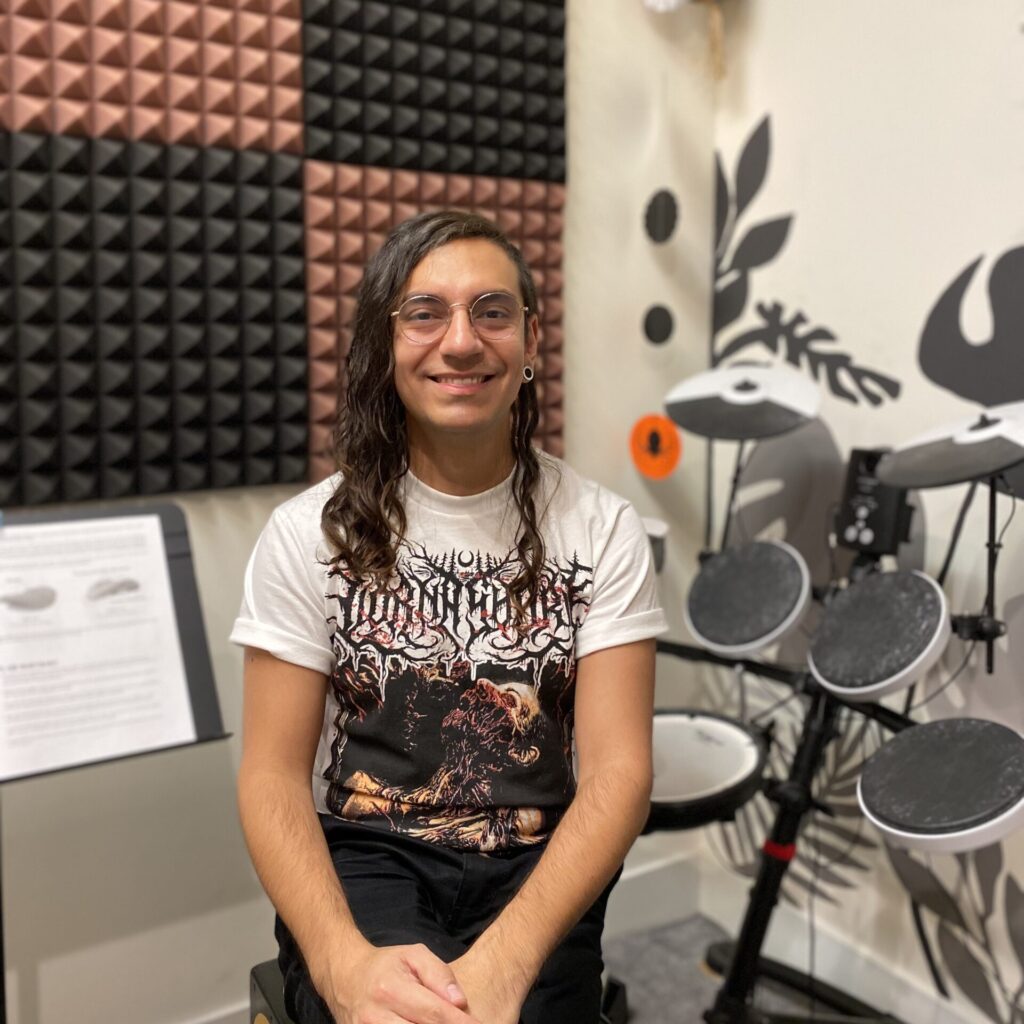
Instruments: Drums, Percussion
Arturo has been performing and teaching drums and percussion all over the world! As a young child in Chile he learned different techniques, genres and styles like jazz fusion, rock, metal, latin jazz, bossa nova, among others. Now in Canada, Arturo is excited to continue his musical journey and pass on his knowledge to the next generation of musicians.
John Doiar
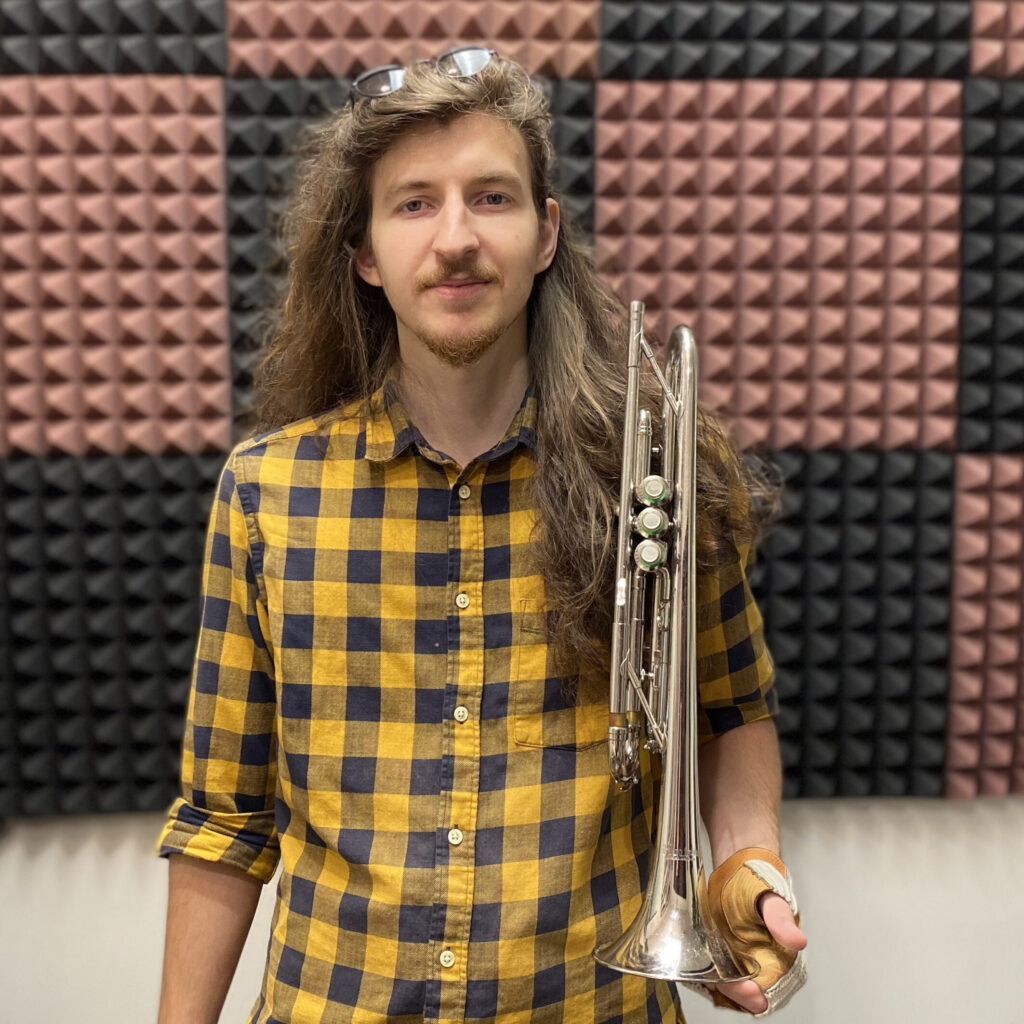
Instruments: Trumpet, Trombone, French Horn, Tuba, Beginner Drums, Beginner Percussion
John has 8 years of music school under his belt which includes 4 years of musical college and a 4 year bachelor degree from an international music institution. As a teacher, John is patient, calm, and student-oriented. He is flexible in his approach to helping his students learn and retain concepts. John’s favourite music genres is Jazz, especially Hard Bop and experimental, as well as Hip-Hop, Punk, Rock and Metal.
Sign up now!
Embark on your journey today!
Excited to start? Book your first lesson in our easy online calendar with just a few clicks —getting started is simpler than you think!
Not sure where to start? Let’s chat about your goals and the best fit. We’d love to help!